
The Future Leaves Footprints in the Present
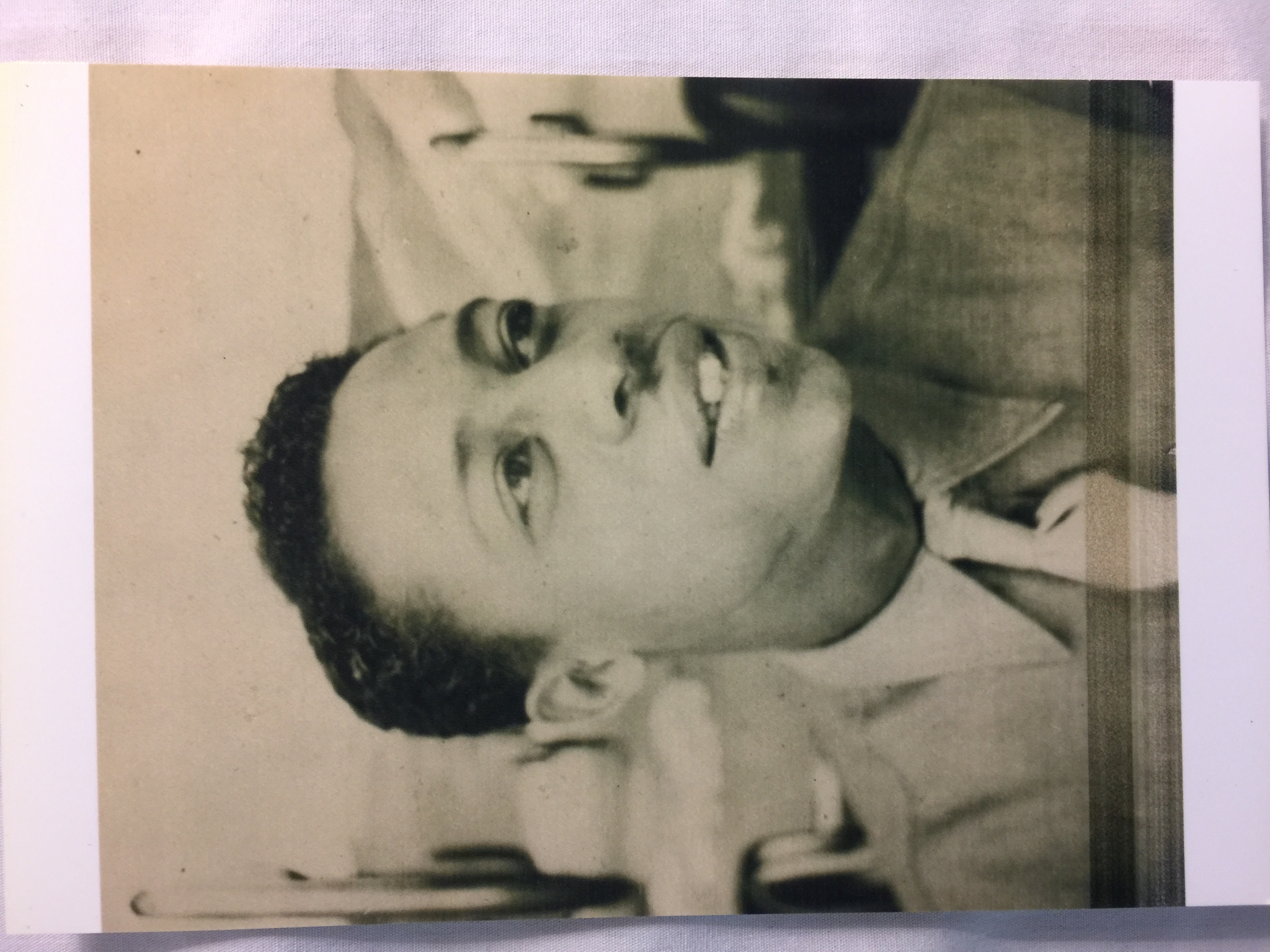

“The macro trends of your era are not background noise — they are navigational winds for your future.”
One of the most valuable skills you can develop in life is the ability to recognize the future before it fully arrives.
Not predict it perfectly.
But see enough of its direction to begin preparing yourself before the crowd catches on.
I learned this lesson early in my career as a software engineer in the late 1970s. Back then, computer storage and processing power were expensive, so software systems commonly stored dates using only two digits for the year. A date would contain a two-digit month, two-digit day, and two-digit year.
Even early in my career, something about that bothered me.
I remember asking my manager why we were continuing to design systems that way when it was obvious the logic would fail in the year 2000. Every system using dates would eventually face problems once “99” rolled over to “00.”
His answer was simple… “That’s so far away, I’ll be retired by then.”
But I remember thinking something very different.
I was already forecasting the arc of my own life. I realized that in the year 2000, I would only be 42 years old — right in the middle of my career. And if nearly every computer system depended on dates, then eventually this problem was going to become catestrophic.
So I paid attention.
I watched the trends.
I watched the growth of enterprise systems.
I watched the design of data. Expanding a two digit year to a four digit year was not going to be trivial.
I also watched society becoming increasingly dependent on technology.
And over time, while working as a data architect in telecomications in the late 1980s, I began realizing something deeper:
“Every call in and out of a telephone, whether it’s a home phone, cell phone or pay phone, leaves behind a 360-character call detail record.”
Before the 1990s, the primary purpose of those records was simply billing customers for their phone calls.
“But characters, in an information age turning the corner to a new millennium, are valuable.”
That insight mattered.
Most people saw telephone records.
I saw critical and valuable information.
I saw patterns, trends.
I saw the early stages of a world where data itself would become one of the most valuable assets in business and society.
And at the same time, another massive technological wave was starting to emerge: Y2K.
By the early 1990s, companies everywhere were scrambling to assess risk, remediate systems, redesign applications, clean up data, and prepare for a technological deadline that had been quietly approaching for decades.
But here’s the important part:
The opportunity did not suddenly appear in the 1990s.
The clues had been visible much earlier.
That realization heavily influenced my decision to start my own consulting company focused on data and analytics. I understood that data was becoming foundational to the future of business and that the approaching Y2K transformation would create enormous demand for organizations capable of helping companies navigate change.
That insight became wind in my sails.
This principle applies far beyond technology.
Every generation contains signals about the future.
Most people are too consumed by the immediate pressures of daily life to notice them. They live almost entirely inside the context of now.
But successful people often learn to step outside the moment and think meta-contextually.
They look backward across decades to see patterns.
They look forward to imagine consequences, and more importantly, opportunities...
They observe where society, technology, economics, and human behavior are converging and heading. Then they position themselves ahead of the curve.
That is where opportunity lives.
Today, we are witnessing another massive shift through artificial intelligence. AI is not simply another technology trend. It is an inflection point on the scale of the harassing of electricity, and the industrial revolution.
It is reshaping the structure of nearly every industry. Think about how it has almost killed the taxi industry (Uber) or how it did kill the video casset rental business of Blockbuster (Netflix), and even some retail like Sears (Amazon).
And because AI depends on data, organizations everywhere are being forced to rethink processes, decisions, automation, knowledge work, and even the nature of human labor contribution itself.
But many people still believe their roles and companies are insulated from disruption by AI. But history teaches otherwise.
The people who thrive during periods of massive change are rarely the people who waited for certainty. They are the people who recognized the signals early enough to begin preparing before the transformation became obvious to everyone else.
The future leaves footprints in the present.
Pay attention to what fascinates you.
Pay attention to what industries are struggling to adapt.
Pay attention to what technologies are compressing time, reducing friction, or fundamentally changing human behavior.
Then ask yourself an important question:
What opportunity is forming right now that most people still cannot fully see?
That question could change your life. Because the best time to prepare for the future is before the future arrives.
And the people who learn to align themselves with the direction of change often discover that the winds of transformation begin carrying them toward opportunities others never saw coming.
—
Invest 5 Minutes to Snap Yourself Into a New Reality
What major trend do you believe will reshape society over the next 10 years?
Write it down.
Now ask yourself:
What industries will it affect?
What problems will it create?
What opportunities will emerge because of it?
What skills should you begin developing now?
What business could you build around helping people navigate that change?
Where could you position yourself ahead of the curve?
Most people wait until change becomes unavoidable. Leaders prepare while the signals are still faint.
The future is already whispering.
Are you listening?
Namaste 🙏🏾
Mark Johnson
May 18, 2026


Comments